
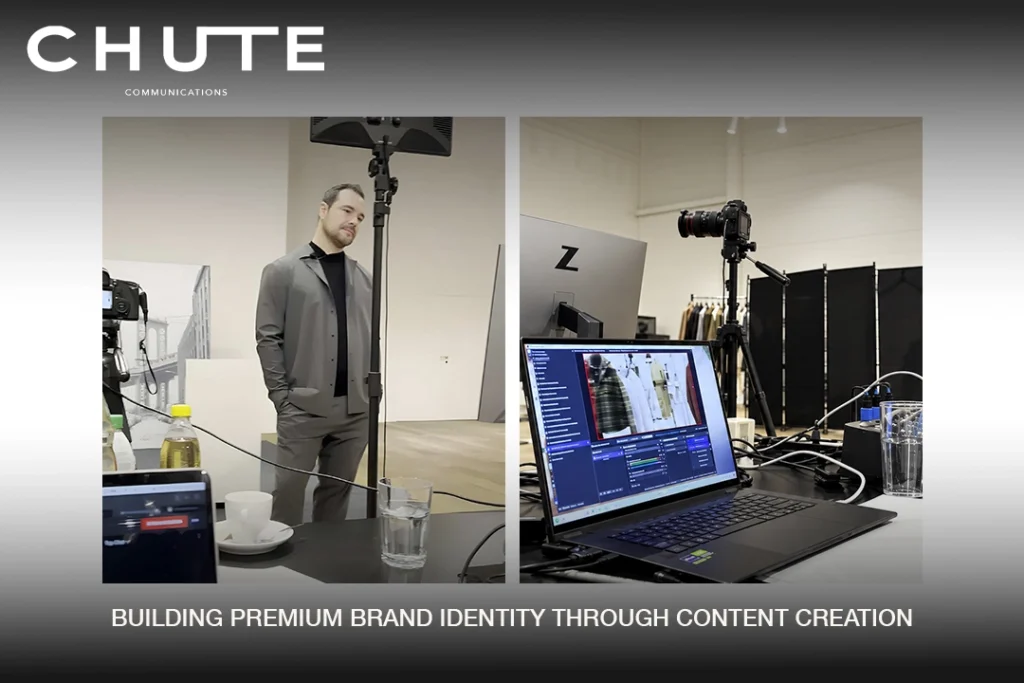
A Swiss manufacturer has a disciplined product, a serious price point, and a LinkedIn feed that looks like it was assembled by committee. Every post is defensible on its own. Together, they say nothing in particular.
That gap between how a business describes itself internally and what a prospect reads in thirty seconds of scrolling is the real problem. It’s also the work a content creation agency is hired to do. Strategy first, production second.
What Makes Content Important to Premium Brand Identity?
At a premium price, your content is often the only evidence a prospect has before the first conversation. There’s no cheap trial purchase to test you with, so the feed, the website, and the sales deck have to do the convincing.
Consistency has measurable rewards. According to a 2026 collection from worldmetrics.org, B2B businesses that have a consistent visual identity across all platforms have a 23% higher margin of profits. The effect occurs as a result of the decisions taken with regard to the substance of the content, whether it can be put across and how best to do so but not how much content has been imposed on the audience. Having a consistent and coherent visual brand identity is more significant than simply making efforts to keep your brand in sight by a number of broadcasts. Every publication contributes to either creation of the premium brand identity or its confusion.
Translating Brand Strategy Into Compelling Content
A positioning document is useless until it becomes messaging pillars, tone of voice rules, and a calendar. In that order.
Good premium brand strategy is practical. We at chute agency work with three or four pillars, and every piece of content has to answer to one of them or it doesn’t get made. It’s a blunt test, but it kills the filler before anyone spends money on it.
Before anything is briefed, your content strategy has to settle three questions:
- Who exactly is this for?
- What will the brand say that competitors avoid saying?
- What single impression should it leave?
The common failure is a 40-page brand book that no freelancer ever opens, because nothing in it tells them what to write on a Tuesday.
Using Visual Content to Express Brand Character
Visual decisions are quicker to deliver meaning than written words: such decisions can include lighting, cropping techniques, pacing, and acceptable amounts of white space for the brand. A product captured at f/1.4 in natural light conveys something quite different from the very same object in the white studio setting. Both are competent. Only one belongs to a brand selling restraint.
Luxury brands have started embracing a new phase in their creative process, including sharing styling, the craftsmanship along with the characters behind the scenes instead of relying solely on finished visuals. Narrative-driven short-form videos beat the sophisticated product loops, as in this case, viewers have a chance to follow the visual storytelling through various pictures. The best-known premium brand content the reasons why somebody cared about producing this item and mastering the production process.
Creating Consistent Content Across Brand Touchpoints
There is typically a more extensive list of audits that clients anticipate. These include LinkedIn, one’s website, sales decks, email chains, inserts for product packaging, and materials for exhibitions. Brand communication through the brand can work if its client gets the same message from it.
Demand Metric found that consistently presented brands see a 23% increase in revenue over inconsistent ones. Yet fewer than 10% of B2B companies say their branding is fully consistent. That gap is where most of the opportunity sits.
Scale doesn’t excuse drift. Coca-Cola serves more than 200 markets and introduced its updated worldwide identity in July 2026 to ensure uniformity in packaging, retail, and digital. Apple has refreshed its brand in more than 50 sub-brands with the help of a refined orange as an anchor of its identity,
Customize the format for each channel, but don’t change the main idea.
Balancing Storytelling With Premium Brand Positioning
According to industry standards, product-related content constitutes about 30% while heritage and brand storytelling make up the remaining 70%. However, too many premium brands make the mistake of emphasizing product content.
In projection, it has been assumed that 50% of customers visiting boutiques will have checked online prior to a shopping journey, while by 2025, a large share of all luxury purchases is still expected to be carried out in stores, 75%. The strategy deployed by luxury brand communication must be coherent, which means that the message a customer comes across on Instagram should match the one they hear in store.
The brand positioning of the premium product flops once storytelling becomes just a decorative element. Tell the story that reveals the price instead of covering it.
Adapting Content for Different Audiences and Markets
Germany and Switzerland are not one market, and acting like they are one results in higher expenses. Customized campaigns have conversion rates six times higher than campaigns that haven’t been customized, according to the research by Common Sense Advisory.
The supporting numbers are consistent:
- 84% of businesses report revenue growth from localization.
- 72% of social media brand engagement happens on local pages.
- A study claims that 60% of consumers are more inclined to choose brands that have content tailored to their location.
The meaning of adaptation really comprises registered message, support references, and evidence, not only captions translated from other languages. Reportedly, as many as 90% of companies intend to go multilingual in the next 5 years or already have their content localized. A content creation worth the retainer plans that architecture before you need it.
Building Long-Term Brand Recognition Through Content
Recognition compounds slowly, which is why 40% of B2B marketers are increasing brand-building budgets and shifting spend upper-funnel. You’re in it for the long stretch, or you’re buying attention repeatedly.
Two mechanics do most of the work. To start with, case studies and testimonials will be regarded as the most efficient type of content by sixty percent of B2B marketers in 2025. Furthermore, the content posted by employees obtains eight times higher engagement than that published by the brand account. Hence, introducing your own team in the content production process could be very helpful.
The cash aspect is also attractive. The customers considering the content critical are more likely to purchase by 131%.
Start with an audit of your last 90 days of published content against your pillars.