
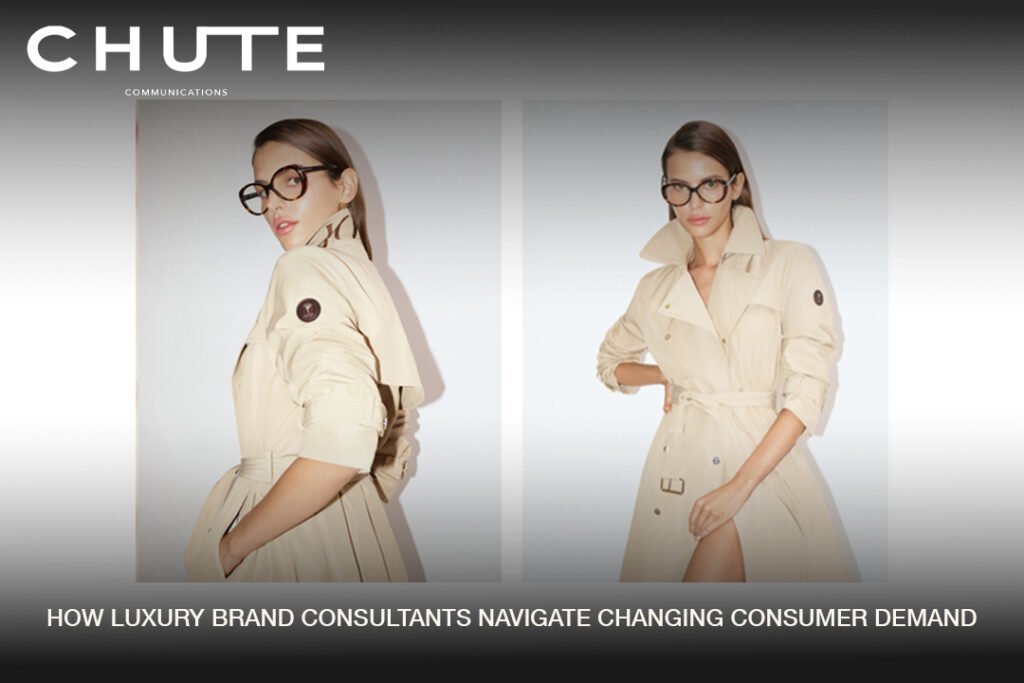
A decade ago, if you had heritage and exclusivity, that was basically your whole strategy. Clients trusted the name and that was enough. That’s not really true anymore, and most luxury houses feel it before they can articulate it. The same customers who used to accept a brand’s word for things now want to understand why they should. That shift is exactly why luxury brand consultancy has become less of a nice-to-have and more of a necessity for brands trying to stay relevant.
We’ve had plenty of conversations at Chute Agency with executives who genuinely believed their brand equity was untouchable. No, it’s not. The erosion of brand equity is usually slow and subtle, so that you are in big trouble when the change becomes obvious in the figures. Over time and fundamentally, there are a couple of things that remain: the continuous but discreet recalibration of the brand, not forgetting the element originally attracting the consumers to the brand.
How Luxury Consumer Expectations Are Changing Across Premium Markets
In the past, high-end clients valued a product and its associated narrative. At this point, they want the product, the narrative, and the validation that the narrative is authentic. Sustainability claims get checked. Manufacturing processes get questioned. Service gets compared across three or four brands before anyone commits to one.
Luxury consumer trends right now lean heavily toward this kind of scrutiny. Buyers research before they buy, sometimes for weeks. They’re not just looking at the product; they’re looking at whether everything around it, the packaging, the emails, the way staff talk to them, actually feels consistent.
This is premium consumer behavior in its current form: patient, well-informed, and genuinely resistant to being sold to. Brands that get defensive about this scrutiny tend to lose ground. Brands that lean into it usually come out stronger.
Using Consumer Insights to Guide Luxury Brand Decisions
For a long time, luxury ran on instinct, and honestly, that instinct built some incredible brands. But instinct on its own doesn’t scale the way it used to, especially when a brand is trying to expand into a new market or a new generation of buyers.
Luxury consumer insights are useful here, but only when someone knows how to read them properly. Dashing a client off the dashboard with a few stats won’t do the trick really. The key here lies not in the dashboard itself, but in understanding what implications the numbers on the dashboard would have on that particular brand if the marketplace changed.
We usually start with a few questions:
- Where is loyalty quietly slipping, and can we say why?
- Which parts of the customer journey are causing friction instead of delight?
- What are clients expecting that nobody has actually delivered yet?
The answer isn’t usually a single big revelation. It’s more often a slow pattern that only becomes obvious once you’re looking at the right data in the right way.
Balancing Heritage With Changing Luxury Consumer Preferences
This is where a lot of brands get stuck. Heritage is genuinely valuable, right up until it becomes a reason to avoid doing anything differently.
Good luxury brand strategy doesn’t mean throwing out the archive or reinventing a house from scratch. The idea is to come up with a fresh perspective from an existing base. A leather goods brand which has mastered its craft for sixty years may not be interested in chasing the latest trends. That brand should convince the world that its craftsmanship is not outdated but rather an optimal solution to a problem that many people have now and are looking for solutions that are both high quality and durable.
The line between staying relevant and losing yourself is thin. Move too quickly and you lose the clients who chose you because you were consistent. Move too slowly and you become something people admire but don’t actually buy.
Adapting Luxury Experiences to New Purchasing Behaviors
The way high-net-worth clients shop has changed more than most brands realize. Fewer spontaneous showroom visits. A lot more research done quietly online before anyone walks through a door.
That doesn’t mean luxury needs to become a digital-first category. It means the experience has to be equally strong no matter where a client engages. If someone messages a concierge at 11pm, that interaction needs to feel just as considered as an in-person appointment.
Changing consumer demand isn’t really about convenience here. It’s about keeping that sense of personal attention even as more of the relationship moves online, which is a genuinely difficult thing to get right, and not something a generic playbook can solve.
How Market Research Helps Consultants Identify Emerging Demand
Emerging demand almost never shows up as an obvious signal. It’s usually something small: a category that’s quietly picking up interest, a customer segment nobody was paying attention to, a competitor stumbling in a way that opens a gap.
Solid luxury market research is how you catch these things early, before they’re obvious to everyone else in the market. That usually means combining direct client conversations with harder market data, rather than relying on either one alone.
Responding to Differences Between German and Swiss Consumers
Here’s something we don’t see discussed much: luxury brands Switzerland operates in and brands built for the German market need genuinely different approaches, even though the two countries sit right next to each other.
Sometimes the Swiss are not that interested in brand status, but privacy and a good, enduring relationship is something they greatly appreciate. The Germans are also not very keen on brand status, it is the quality and craftsmanship that matter to them that they respond to most.
Luxury consulting Germany work often ends up leaning into engineering credibility and tangible proof points. Swiss-facing strategy usually leans the other way, toward discretion and a quieter, more understated kind of service. Treating these two markets as one and the same is a mistake we see more often than you’d think.
When Luxury Brands Should Reassess Their Market Approach.
One or two slow quarters do not necessarily point to the truth that something’s wrong at the company. Then again, paying attention to what comes next is quite important: the company is not attracting the same type of people that were originally targeted, the number of repeat sales has dropped to zero, or customers no longer perceive the brand the same way as before.
These are the moments that a luxury brand consultants with vast hands-on experience comes in handy. Instead of getting excited over every tiny downward movement, a good consultant understands which developments are actually worthy of a change of course.
Luxury brand consulting was never about change for its own sake. It’s about protecting what still works while carefully making room for what’s next.
At Chute Agency, that’s been our modus operandi for over 15 years: working silently, meticulously, and always being centered on a deep insight of what is a brand really for a brand to become a client’s irreplaceable. Cheer up if lately your brand is being questioned more intensely – it’s a sign that it’s the moment to be questioning ourselves and rethinking our plans.